


WINTER HAVEN, Fla. — For years, undocumented students have been able to pursue education through Florida’s postsecondary career and technical education programs.
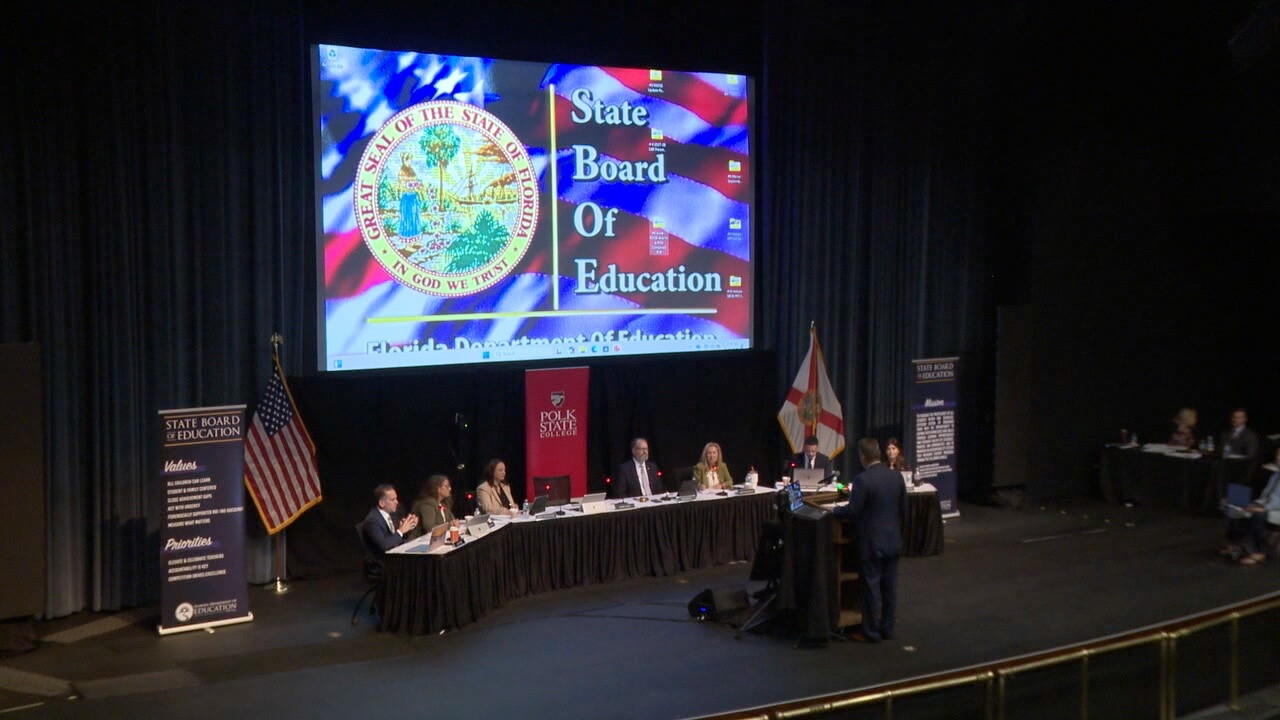
That changed Wednesday, when the Florida State Board of Education approved a new rule governing admission to district postsecondary career and technical education programs. The rule was on the board’s action agenda during its meeting at Polk State College in Winter Haven.
For Polk State College student Jezlyn Delacruz, the change raises concerns about students who may lose access to educational opportunities.
“I do not think it’s fair. I think it’s really unfair,” Delacruz said. “Everyone should be on the same level, and everyone deserves freedom and education. It’s not their fault, like, they didn’t ask for this.”
Delacruz said she values seeing students from different backgrounds on the Polk State campus and said that diversity makes her feel like she belongs.
She worries other students may not have the same opportunity to pursue an education.
“A lot of people come from different places, because they want to get a better and higher degree, higher education, higher jobs, and if they can’t do that then it’s just like, why?” Delacruz said.
The new rule, identified by the Florida Department of Education as Rule 6A-10.0246, establishes admission requirements for district postsecondary career and technical education programs. The rule was approved as an action item during Wednesday’s State Board of Education meeting.
Career and technical education programs provide training for a wide range of jobs and industries, including fields such as information technology, mechanics, HVAC and health care.
The CTE change is part of a broader series of Florida policies addressing undocumented students’ access to public higher education.
Carole Gauronskas, vice president of the Florida Education Association, said the policy could affect younger students who are preparing for careers through education programs.
“When those children are being successful in our public schools and we do want to have a dual enrollment of a CTE program, why take that opportunity away?” Gauronskas said.
Gauronskas also questioned the potential impact on Florida’s workforce.
“They come here and look for that American dream that you and I and millions of others have been able to achieve,” she said. “Why put another road block in front of a child, who by the way didn’t come here on their own? They came because their parents were seeking a better life.”
The Florida Department of Education lists career and technical education as part of its career and adult education programs and publishes statewide guidance and rules governing those programs.
The new restrictions are part of changes affecting access to Florida’s public education system.
On Sept. 3, Florida’s State University System Board of Governors voted unanimously to ban undocumented students from the state’s 12 public universities. The university system’s decision follows a June rule from the Florida Board of Education barring undocumented students from the state’s 24 public colleges and GED programs.
The changes are scheduled to affect admission under the new requirements beginning with the 2027-28 academic year.
