

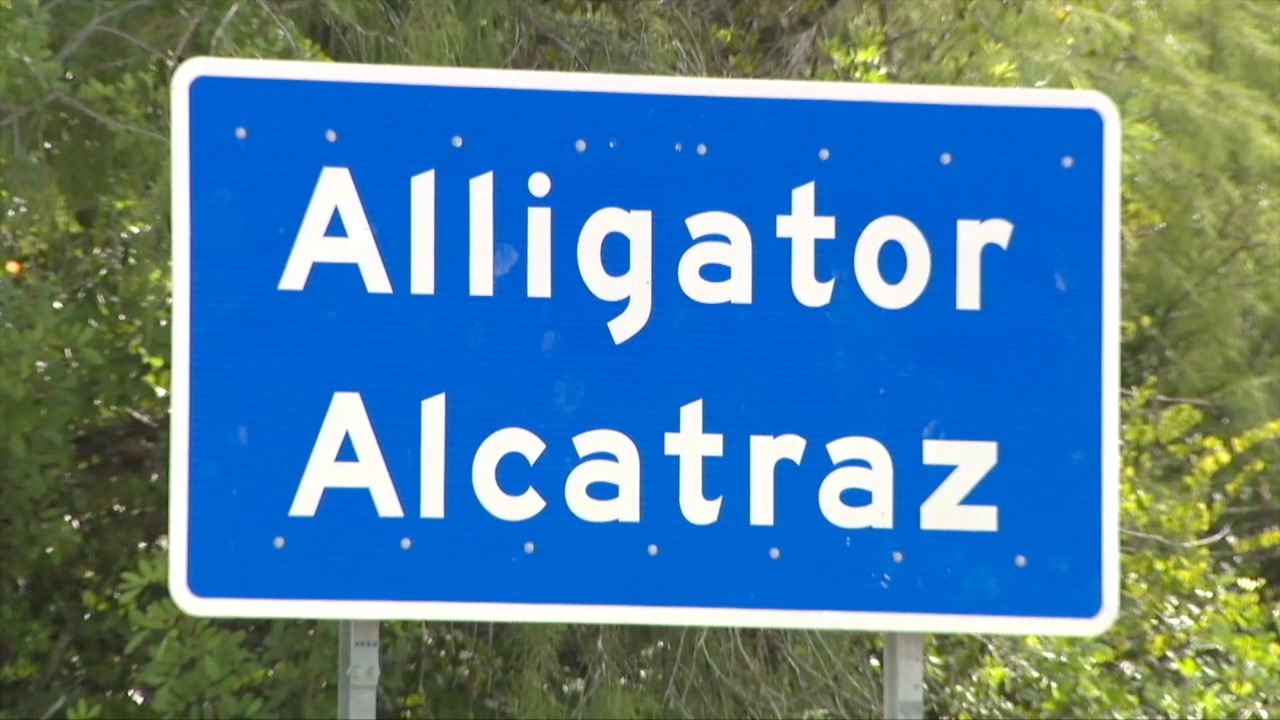


TAMPA, FL — The detention center Florida dubbed "Alligator Alcatraz" may have shut down, but questions remain about who will ultimately pay for it.
Last year, the federal government awarded Florida more than $600 million through FEMA to help fund operations at the immigration detention facility built in the Everglades.
WATCH ALLIGATOR ALCATRAZ, IS FEDERAL FUNDING AT RISK?
While state leaders touted the project and President Donald Trump praised it shortly after opening, only a portion of the promised funding has been distributed so far.
Now, two federal reports are putting renewed attention on whether that money could be withheld of it Florida could face additional scrutiny before receiving the rest of the funds.

"I think what these reports and the findings in them do is create a potential basis for scrutiny," said Stetson University law professor Anthony Palermo, who specializes in contracts.
Federal Reports Raise Concerns
The questions stem from two separate federal reviews examining the facility's operations.
A report from the Department of Homeland Security's Office of Inspector General found the detention center failed to meet several basic standards related to environmental health, safety, medical care, food service and hygiene.
According to the report, some detainees reported lacking access to clean drinking water. Inspectors also documented detainees being confined in what were described as "small metal enclosures."
A separate Government Accountability Office report highlighted concerns about spending and potential waste. The report found Immigration and Customs Enforcement had not finalized a contract or formal agreement with Florida before immigrants began arriving at the facility.

Without pre-negotiated rates in place, the state sought reimbursement at significantly higher costs. The GAO found Florida's approved reimbursement rate was $249 per detainee per day, compared with ICE's reported median detention bed rate of $92 per day, a difference of 171%.
Does This Threaten Federal Funding?
So far, neither report concludes Florida violated the terms of its FEMA grant. That distinction could prove important.
Palermo says federal agencies typically look first at whether grant recipients complied with the specific requirements attached to funding.
"Just because there is some sort of deviation from the anticipated standard doesn't necessarily mean that any funding will be withheld," Palermo explained.
While the grant excludes typical termination language, it requires Florida to provide a detailed cost breakdown and justification for each reimbursement request.
He noted that FEMA retains the authority to review spending, conduct audits and potentially challenge reimbursements if costs are deemed unreasonable.
"There is always a chance that there could be an audit or even an investigation into reimbursement that was granted that could potentially lead to a reversal," Palermo said.
Federal regulations also give agencies avenues to revisit previously issued payments.
"There is usually a chance under federal regulations for the government to potentially audit, investigate, review funds that have been paid out and make sure that they were reasonable and could potentially claw them back," he said.

Florida's Governor Pushes Back
Gov. Ron DeSantis dismissed the findings in the federal reports and defended the state's handling of the facility.
He also told us last month that additional federal funding continues to flow to the state. To date, just over $134 million has been dispersed from the grant according to USAspending.gov.
Neither the Governor's office or Florida's Department of Emergency Management responded to our inquiries about how the federal reports could impact funding for the facility.
Closed with an Open Question
The detention center is closed. The federal money is still in question. And until federal officials determine whether all reimbursement requests meet grant requirements, Florida taxpayers have no guarantee they won't end up responsible for part of the final bill.
