

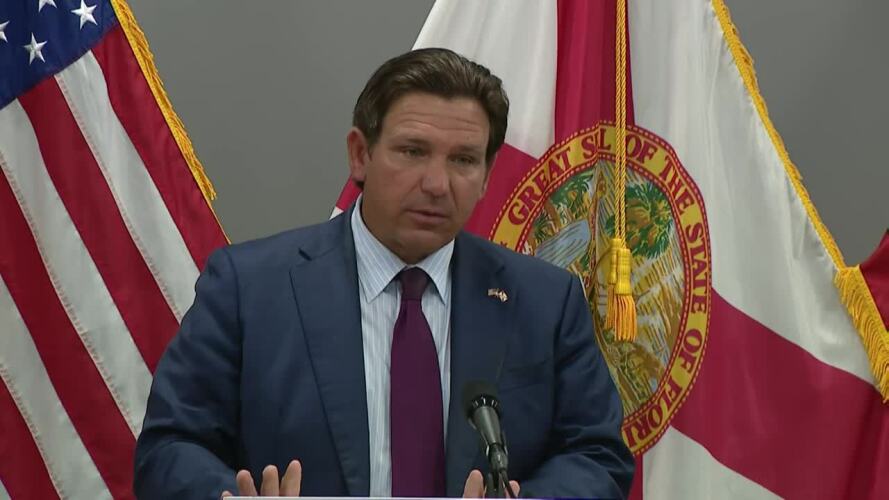


BRADENTON, Fla. — Gov. Ron DeSantis signed a property-tax bill Wednesday that will help shape how local governments respond if Florida voters approve a major homestead exemption expansion in November.
The new law, SB 4-F, is tied to a proposed constitutional amendment that would expand the homestead exemption on non-school property taxes to $150,000 in 2027 and $250,000 in 2028. The amendment would still need 60% of voters' support to pass.
WATCH: DeSantis signs property-tax bill as broader fight heads to Florida voters
SB 4-F does not create the expanded homestead exemption on its own. Instead, it changes the rules for cities, counties, and special districts by making it harder for them to collect additional property tax revenue as property values rise.
In simple terms, the law generally pushes local governments closer to the rollback rate — the rate designed to bring in roughly the same property-tax revenue as the year before. If a local government wants to go higher, it would need a tougher vote threshold.
DeSantis framed the measure as protection for homeowners who have been squeezed by rising property taxes, insurance costs, and inflation.
“What better tool in the toolbox do we have than to do this for our homesteaded property owners?” DeSantis said at the signing in Bradenton.
Florida Chief Financial Officer Blaise Ingoglia also backed the move, arguing that local governments need to be more disciplined in their spending.
“We need government at all levels to start thinking about spending cuts,” Ingoglia said.
But opponents argue the promise of savings leaves out what cities and counties may be forced to give up.
Democrats have warned that if local governments lose revenue, basic services could be affected — including police, fire, parks and libraries.
“What we saw was the state government, that’s supposed to be a backstop for our local communities, absolutely bully them into a position where they’re not even sure how they’re going to cover their most essential needs, including things like police and fire,” said House Democratic Leader Fentrice Driskell.
Watch full press conference
Rep. Kelly Skidmore, D-Delray Beach, went further, calling the amendment “a lie” and “a false narrative.”
Former Republican state Senator Jeff Brandes, who now leads the Florida Policy Project, has also raised concerns, saying voters still do not know the full impact of the proposal.
“The governor doesn’t know. Literally nobody in Florida knows the entirety of the impacts of this,” Brandes said.
That uncertainty is now central to the campaign ahead.
Supporters will pitch the amendment as long-overdue relief for homeowners who have watched tax bills climb with property values. Critics will argue it could shift costs elsewhere, forcing local governments to raise fees, cut services or find other revenue.
DeSantis also signed a second bill on Wednesday aimed at local government spending. HB 1329 requires cities and counties to post more budget information online and publicly identify possible cuts before approving their budgets. Supporters say it provides taxpayers with greater transparency as the property-tax debate moves toward the November ballot.
The Bill tightens limits on how much counties, cities, and special districts can raise property-tax rates, generally tying them closer to the rolled-back rate. The rate meant to bring in roughly the same revenue as the year before.
Share Your Story with Forrest
Capitol Reporter Forrest Saunders is dedicated to sharing your voice with political leaders throughout the state. He works to hold our elected leaders accountable and amplify your concerns. Let Forrest know about the issues you want state leaders to focus on.
.

Auto glass company salesman pushes questionable windshield replacement at Tampa dealership
A Service Pros Auto Glass salesman said filing an insurance claim would not affect insurance premiums.
