
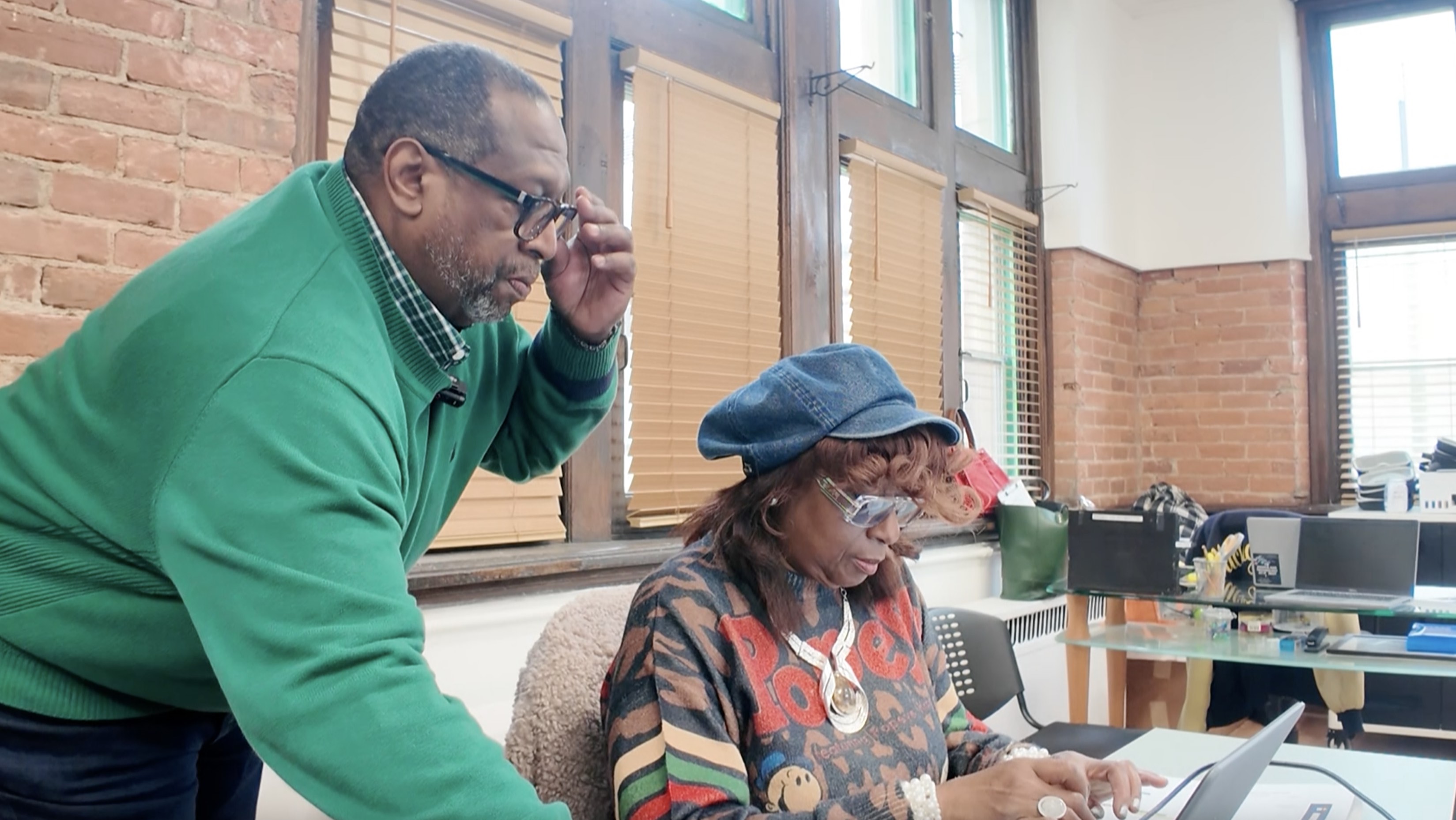


Detroit resident Lonnie Lacey is picking up new tech skills at his local senior center.
"I tell everybody I’m a real-life Flintstone, but I’m trying to become a Jetson," Lacey said.
Applying new technology to your personal life is one thing. On the job, it can be daunting, especially with artificial intelligence increasingly in the mix.
Opting to retire early
The careers of many late-stage workers survived the arrival of the internet, and later, smartphones. But the learning demands of AI may be pushing some older workers into early retirement.
RELATED STORY | More than half are 'getting tired of hearing' about AI, survey finds
"With AI, this isn't just changing one sector or one type of work. This is going to change work across the board," said Dr. Jasmine Escalera, a career expert with the online career service platform Zety.
The Wall Street Journal recently profiled some experienced workers who are opting to retire instead of taking on AI, seeing its arrival as the cue to leave.
"We're talking about highly professionalized individuals; they have probably seen quite a lot of changes in the career world over the cross of their 30- or 40-year career span," Escalera said. "They might be at the point where they're saying, 'Well, is it really worth it for me to learn a whole new technology?'"
AI skepticism across age groups
It's not only late-stage workers who are wary of AI. In a recent Gallup poll, 48% of employed Gen Zers find that the risks of AI in the workplace outweigh the potential benefits. Only 15% said the potential benefits of AI outweigh the risks, while 37% are neutral.
Escalera said companies should be initiating conversations about the value of AI integration with all employees.
"Having conversations around how AI can actually take away some repetitive, automated tasks, so they can use those skills better -- so that they can go ahead and mentor junior employees," Escalera said.
RELATED STORY | Companies pour billions into AI. Is the investment paying off?
There is no exact count of retirements tied directly to AI, but the share of workers ages 55 and older is slipping. In March, that group made up about 37% of the workforce, which is the lowest level in more than 20 years.
Retiring early also requires having the savings to do so, which is not realistic for everyone. The platform LiveCareer found that 61% of older workers are regularly tapping into retirement savings to cover day-to-day expenses.
