
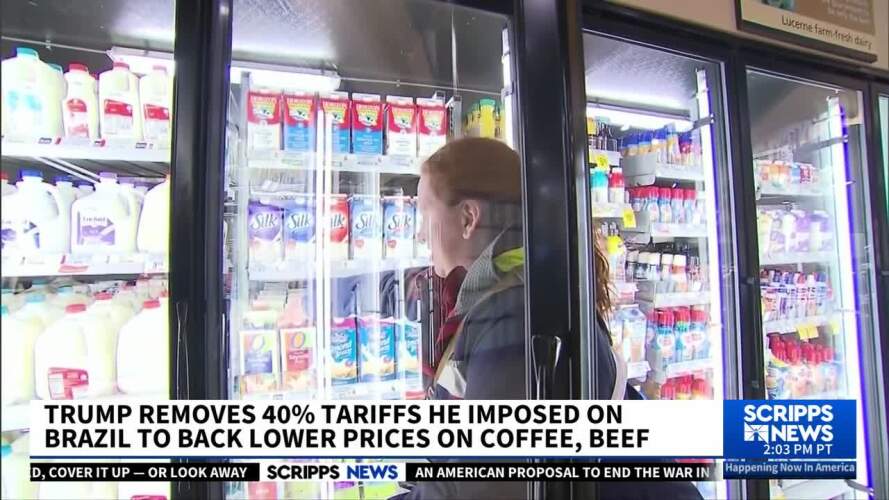


Your morning cup of coffee or purchase of beef, fruit, nuts and more may get a little bit cheaper after the Trump administration on Thursday reversed the 40% tariff imposed on Brazilian food and drink products.
The executive order cites a call with Brazil's president and recommendations from U.S. officials as the reason for the reversal.
Brazil is calling the move "a victory for dialogue, diplomacy, and common sense."
"And today I am happy because President Trump has already started to reduce some of the taxes they had imposed on some Brazilian products, " Brazilian President Luiz Inácio Lula da Silva said Thursday.
The tariffs on Brazilian goods were imposed back in July to punish the country for its prosecution of former Brazilian president and Trump ally Jair Bolsonaro.
This reversal should hopefully come as a relief to many shoppers, especially when it comes to coffee prices, which were up about 40% in September compared to last year.
Brazil is the leading provider of coffee to the U.S., supplying about 30% of the American market.
And it's not just Brazilian goods. Last week, the Trump administration reduced tariffs on certain agricultural products from other countries.
Vice President Vance said it will take time for Americans to see these actions reflected at the grocery store.
"And as much progress as we've made, it's going to take a little bit of time for every American to feel that economic boom, which we really do believe is coming,” Vance said Thursday during a fireside chat. “We believe that we're on the front end of it."
Gabe Hagen, founder of the Brick Road Community Corporation, told Scripps News he's tentatively relieved by the tariff reversal news, but doesn't expect to see costs drop anytime soon.
“With tariff relief, we're still sitting here buying tariffed coffee, probably for the next three to four months,” said Hagen. “One of the things that we are learning is, dependency on these foreign markets for our green coffee, really, we don't have any other alternatives.”
Hagen also remains uncertain that the administration’s decision will stick.
“If these tariffs come back or some other, you know, punch to small business kind of ripples at us, we don't know what it might be. I don't know how many more I can take. And we're only talking about coffee.”
Still, Hagen remains committed to supporting his community, no matter what is thrown his way.
“Small businesses, we are resilient. We're the ones that are employing our neighbors, our neighbors' kids, our neighbors' friends and family. We're going to fight tooth and nail to keep every single one of our neighbors employed as long as we can."
