



TALLAHASSEE, Fla. — Alligator Alcatraz closed in June, but the scrutiny has outlasted the gates.
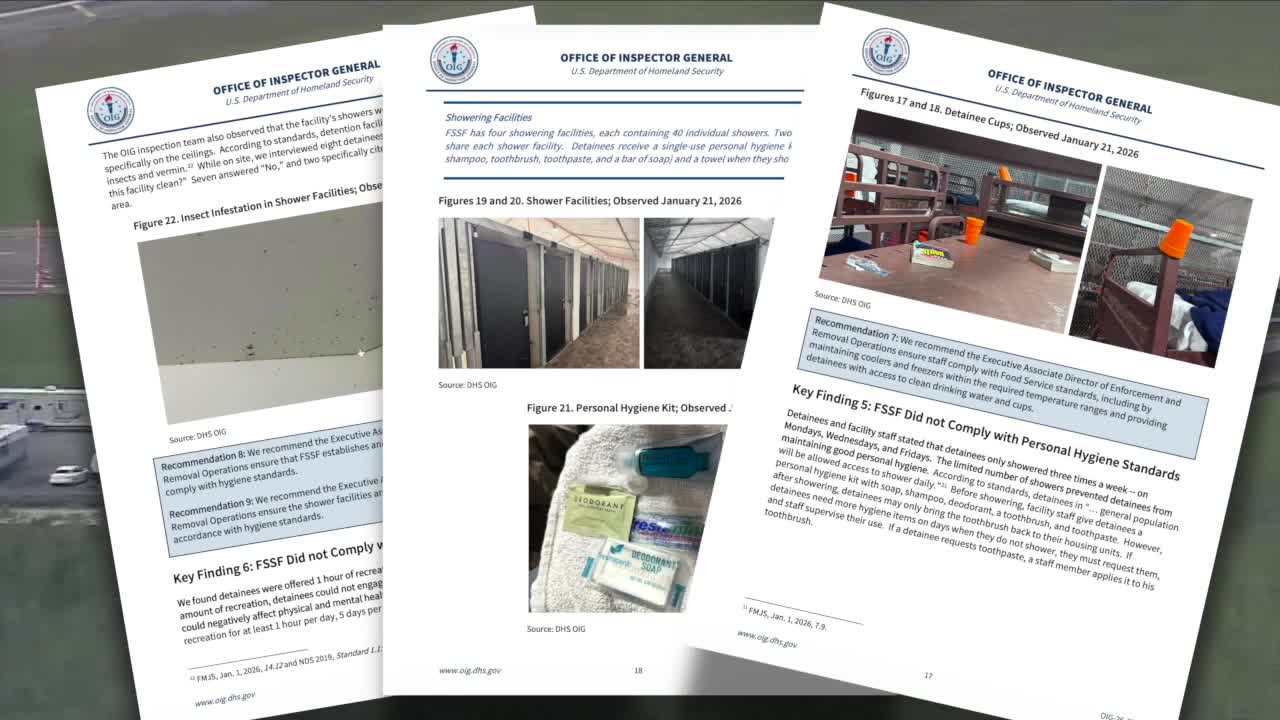
A new Department of Homeland Security inspector general report found serious health and safety failures at Florida’s Everglades immigration detention center, including the use of small metal enclosures to hold detainees for nearly two hours.
WATCH BELOW: DHS watchdog finds serious failures at Alligator Alcatraz
Gov. Ron DeSantis defended the operation Monday, saying it helped federal authorities deport people who otherwise could have returned to Florida communities. The findings arrive amid a continued fight over the emergency powers and public money used to run the facility.
The federal review followed an unannounced Jan. 21 inspection. Records showed that 79 detainees had been confined in metal enclosures offering about 18 square feet of floor space between July 17, 2025, and Jan. 18, 2026. Stays ranged from several minutes to nearly two hours, with detainees exposed to outdoor temperatures.
Inspectors described the practice as unprecedented among detention facilities their office had inspected and a significant risk to detainees’ health and safety.
Staff described the spaces as "calming areas" for people seeking time alone. Inspectors also identified an instance in which an enclosure was used after a detainee failed to follow a command.
The review documented insects in bathing areas, showers limited to three times a week and inadequate recreation. Inspectors also found shortcomings in medical care and food service, while finding compliance in the intake and use-of-force areas they reviewed.
Even the rules governing the operation were unclear. Staff could not consistently identify which detention standards applied, according to the report. Inspectors reviewed Florida jail standards and ICE’s 2019 national detention standards, applying the more restrictive requirements when documenting concerns.
In its response, DHS pointed to Florida's responsibility for day-to-day operations. The inspector general administratively closed all 10 recommendations because the facility had ceased operating.
Speaking in Lakeland on Monday, DeSantis acknowledged he had not reviewed the findings.
"I haven't read this report, but I can tell you, there have been a lot of lot of accusations," he said.
The governor said the goal had been to exceed federal standards and argued that Florida's assistance was necessary to help carry out the Trump administration's deportation plans.
"The people they were sending to Alligator, they had some serious, serious issues," DeSantis said. "And so that clearly saved lives, saved a lot of heartbreak for people."
He estimated that Florida's detention assistance helped federal authorities detain and deport about 25,000 people. His remarks referred to both Alligator Alcatraz and a Baker County operation, making that a broader estimate than a count of deportations through the Everglades site alone.
DeSantis also said the federal government had approved reimbursement for the state’s work.
Concerns about conditions began during the facility’s opening week in July 2025.
Democratic lawmakers attempting an unannounced visit were stopped at the gate, with officials citing safety concerns. A state-arranged tour followed July 12.
Lawmakers emerged with sharply different accounts. Democrats described crowded, unsanitary conditions and insects. Republicans said they saw a clean, safely operated facility with working air conditioning.
A separate Amnesty International report published in December 2025, drawing on interviews with former detainees, raised allegations of outdoor confinement used as punishment. Amnesty concluded that the use of what detainees called “the box” constituted torture. That was the human rights organization’s conclusion; the new inspector general report documents violations of detention standards.
The controversy also became a fight over the governor's authority.
DeSantis repeatedly renewed an immigration emergency first declared in 2023. Democrats sought to end that declaration and limit future emergencies, including a proposal requiring legislative approval to continue them beyond a year.
The Republican-controlled Legislature adopted narrower changes through Senate Bill 7040. The law requires quarterly emergency-fund reports covering cash flow, reimbursements, assets and unpaid invoices. It also subjects spending after emergency renewals to legislative budget review procedures.
State Rep. Anna Eskamani, D-Orlando, said she had sought additional restrictions, including a ban on using the fund for detention facilities and unannounced access for lawmakers. Those proposals did not pass.
In an August interview about emergency-fund transparency, Eskamani said the facility's closure had left questions unresolved.
"And though the so-called Alligator Alcatraz has now closed, there continues to still be unresolved questions in the context of where detainees were sent, but also how these dollars were spent and if we'll ever see them again through the federal government," she said.
There has since been a new accounting.
FDEM submitted its overdue spending report Friday, Sept. 11, shortly before lawmakers approved another $250 million for emergency expenses, including immigration costs, according to reporting by The Florida Trib published by WLRN.
That report showed Florida had received $84.5 million of an expected $608 million in federal reimbursement for detention centers. It also listed more than $417 million in unpaid immigration-related invoices as of June 30. Those figures cover the broader immigration effort, rather than a final accounting of Alligator Alcatraz alone.
For Eskamani, the push for oversight has centered on giving taxpayers a clearer view of those decisions.
"We don't have a budgetary issue," she said in the August interview. "We have a prioritization and transparency issue."
Want to see more local news? Visit the WTXL ABC 27 Website.
Stay in touch with us anywhere, anytime.
