
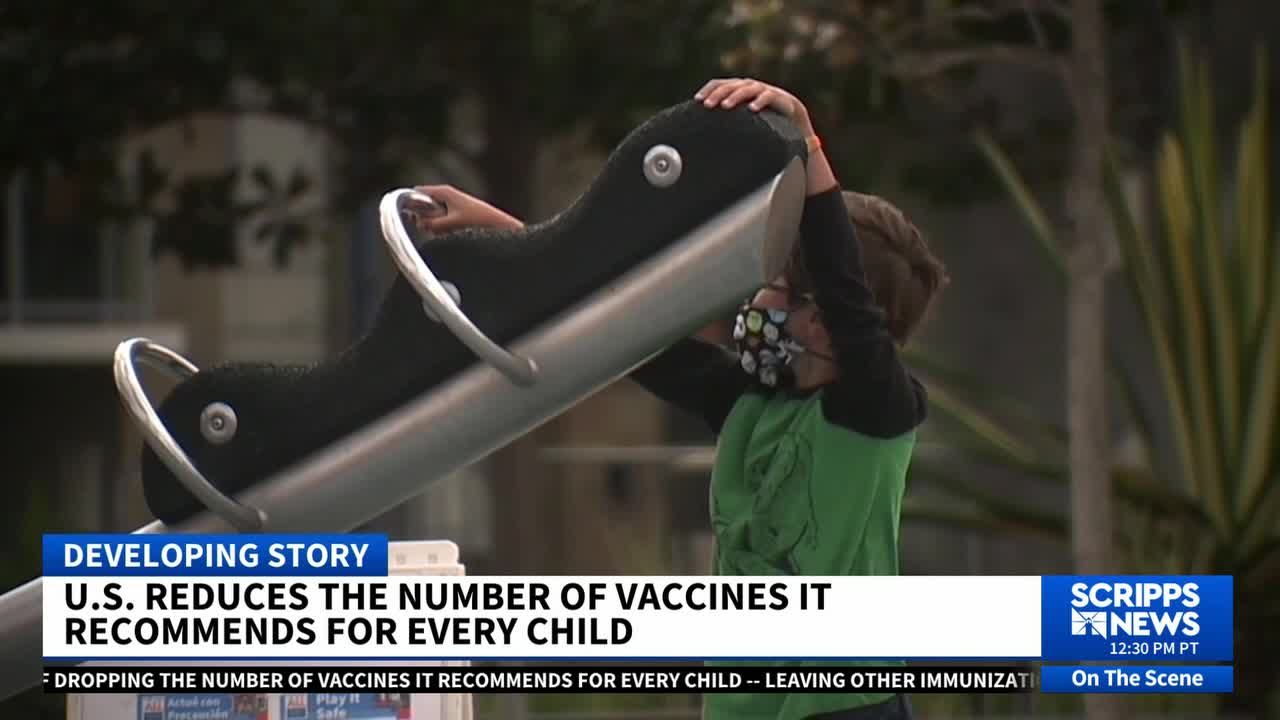


The U.S. took the unprecedented step Monday of dropping the number of vaccines it recommends for every child, leaving decisions about flu shots and vaccines for respiratory syncytial virus to families and their doctors.
The CDC announced the changes to the vaccine schedule in a Monday release, and separately explained which vaccines would remain covered by insurance:
Under the accepted recommendations, CDC will continue to organize the childhood immunization schedule in three distinct categories, all of which require insurance companies to cover them without cost-sharing:
- Immunizations Recommended for All Children
- Immunizations Recommended for Certain High-Risk Groups or Populations
- Immunizations Based on Shared Clinical Decision-Making
The first category will include vaccines for measles, mumps, rubella, polio, pertussis, tetanus, diphtheria, Haemophilus influenzae type B (Hib), pneumococcal disease, human papillomavirus (HPV), and varicella (chickenpox).
"Effective today, America will no longer require 72 'jabs' for our beautiful, healthy children," President Trump said on social media. "We are moving to a far more reasonable Schedule, where all children will only be recommended to receive Vaccinations for 11 of the most serious and dangerous diseases. Parents can still choose to give their children all of the Vaccinations, if they wish, and they will still be covered by insurance. However, this updated Schedule finally aligns the United States with other Developed Nations around the World."
President Trump in December asked the U.S. Department of Health and Human Services to review how peer nations approach vaccine recommendations and consider revising its guidance to align with theirs.
HHS said its comparison to 20 peer nations found that the U.S. was an “outlier” in both the number of vaccinations and the number of doses it recommended to all children. Officials with the agency framed the change as a way to increase public trust by recommending only the most important vaccinations for children to receive.
“This decision protects children, respects families, and rebuilds trust in public health,” Health Secretary Robert F. Kennedy Jr. said in a statement Monday.
Medical experts disagreed, saying the change without public discussion or a transparent review of the data would put children at risk.
“Abandoning recommendations for vaccines that prevent influenza, hepatitis and rotavirus, and changing the recommendation for HPV without a public process to weigh the risks and benefits, will lead to more hospitalizations and preventable deaths among American children,” said Michael Osterholm of the Vaccine Integrity Project, based at the University of Minnesota.
